

This felt particularly important at a time when we know that LGBTQ+ hate crime continues to happen on our doorstep. West Midlands Police recorded 721 LGBTQ+ hate crimes in Birmingham in 2022, 799 in 2023, 669 in 2024 and 634 in 2025. These figures need to be understood carefully, and they do not capture the full experience of hate or the incidents that go unreported, but they demonstrate that this is not simply something that belongs to the past.
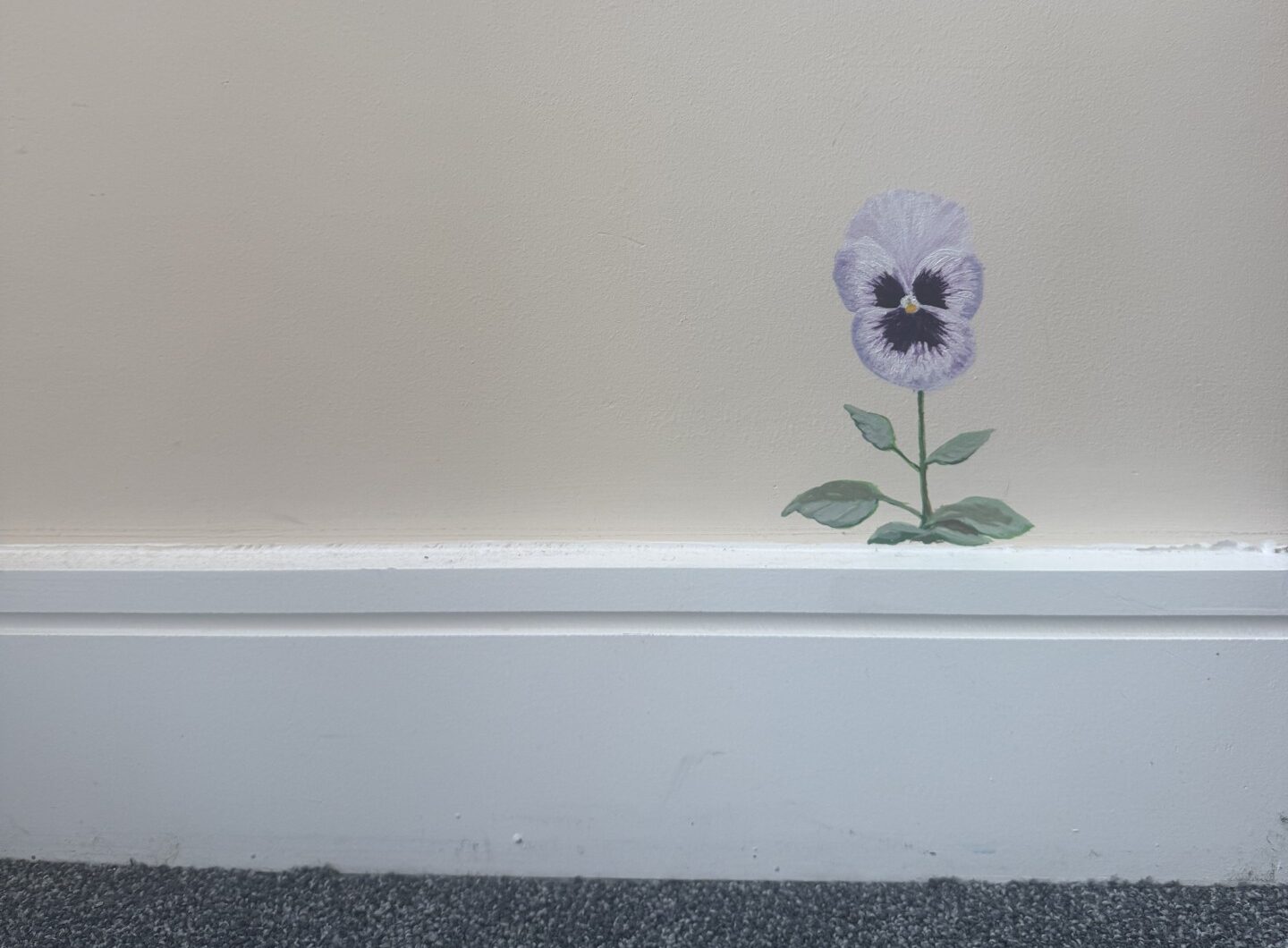
Paul has written about how the flower’s name has historically been used as an insult against gay men, while its connection to the French penser, “to think,” gives it another meaning: reflection. His work turns sites of hatred into places where we stop, remember and think. Unlike the planted pansies, which are living, temporary interventions, a painted pansy can remain. It creates a permanent presence within the community and serves as a lasting reminder of the project and what it represents. That is what we now have at Birmingham LGBT Centre. We are now guardians of this work and of what it stands for.
Having this work at the entrance of the Centre matters enormously. It means that every person who comes through our doors will encounter a visible reminder that queer history is part of Birmingham’s history. It reminds us that the streets around us have not always been, and are not yet, safe for everyone. But it also says something equally important: we are here, we remember, we resist, and we are continuing to build something for the future.
The Pansy Project has always used a very simple gesture, a single flower to create space for conversations about violence, memory, visibility and resistance. Now, that gesture has a permanent place at the Centre. I hope that we can all take a moment to look at the pansy, understand the significance of why it is there, and feel proud that Birmingham LGBT Centre is now part of its story. This is not just something on our wall. It is something we are responsible for carrying forward!